Episode 35 · · 42 min
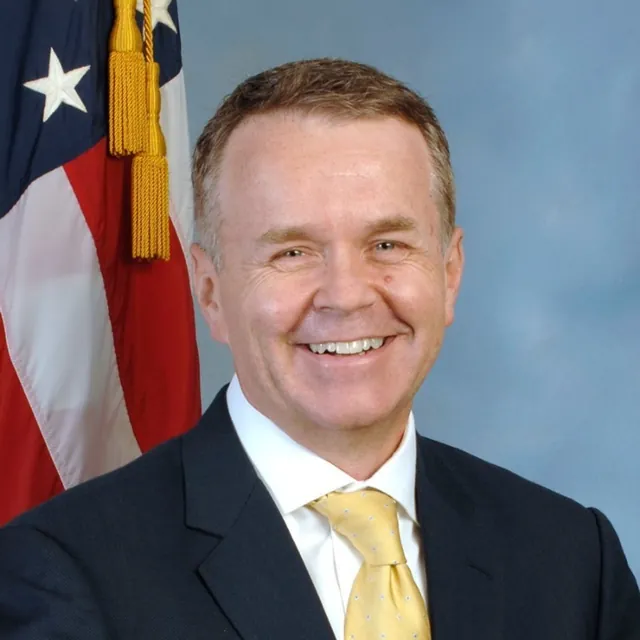
Eric Strom From Lawyer to FBI Cyber Division Unit Chief
Unit Chief, Mission Critical Engagement Unit, FBI Cyber Division
Episode summary
Eric Strom is the Unit Chief of the Mission Critical Engagement Unit, Cyber Division. In this role, Mr. Strom oversees the FBI Cyber Division’s private sector outreach efforts to the 16 critical infrastructure sectors, forging partnerships with companies in those sectors to develop and share threat intelligence related to activities by sophisticated criminal organizations as well as nation-state actors.
Notes
Eric has been with the FBI for 21 years, since June 1999
Originally a lawyer practicing criminal defense and civil defense, then went to non-profit
Early on in the FBI, they had to do a lot of workarounds. Cyber wasn't so straightforward
56 Field offices were all doing something different, then became consolidated centrally as a service organization
Quotes
"Now, it's funny. None of us really had a traditional cyber background. Tom started out his career as a geologist, and Keith actually started out selling, like, furniture. He was a salesman."
"But, I mean, from the legal standpoint, you've got third-party liability and other things. So we really had to walk a kind of a tight rope when it came to what types of malware we were infecting ourselves with. And then how far we'd let it go."
"And so as we're taking it over, it was really interesting to sit behind one of the malware analysts and watch a Wireshark and watch the instructions coming out. I crossed the wire. It was really cool. And when it really kind of sunk in, because to me, it was like a tangible thing. I can actually see it happening as it was going on."
"It's (cybersecurity) probably the most rewarding thing you'll ever do in your life."
Before infosec: Criminal and civil defense attorney
Chapters
- 0:00
Intro: Eric Strom and the FBI Cyber Division
Ayman previews the guest's unconventional background and reflections on a cyber career.
- 1:11
What the Mission Critical Engagement Unit does
Eric explains the 16 critical infrastructure sectors and where the unit sits inside FBI Cyber Division.
- 2:58
From defense lawyer to FBI special agent
He describes law school near the federal courthouse and a three-year hiring process.
- 5:14
Pittsburgh, organized crime and the NCFTA
A mentor pulled him into cyber work at a nonprofit alliance despite no technical background.
- 8:47
Taking over the DarkMarket forum
He explains how a lawyer, a geologist and a salesman ran an undercover forum for two years.
- 11:44
Unique backgrounds, Max Butler and building trust
They discuss what each team member's past career brought, the Iceman case and partnerships with the private sector.
- 17:57
Self-infection platform and the Game Over Zeus takedown
Eric describes infecting FBI machines to study malware and the legal limits of fixing botnets globally.
- 22:04
Skills for cyber investigators and FBI cyber roles
He covers people skills, technical awareness and the agents, computer scientists and analysts on cyber teams.
- 28:37
Advice for police moving into cyber
He points to cyber task forces, the NCIJTF fellowship and the National Academy.
- 33:48
Cybersecurity Awareness Month: basics and FBI relationships
He stresses blocking and tackling, executive support and meeting your local field office before an incident.
- 38:55
How to apply and parting advice
Eric explains applying through FBI.gov, talking to agents and why cyber is rewarding.
- 41:22
Closing: Ayman's new community
Ayman thanks listeners and plugs his new community.
Key takeaways
- Bring prior career skills with you; a lawyer, a geologist and a salesman together ran an undercover forum investigation.
- Cyber investigators need to communicate and build trust as much as they need technical skill.
- You do not have to be a programmer, but a basic understanding of botnets, malware and infrastructure helps.
- Have lunch with someone in the job you want and ask what it is really like.
- Companies should build a relationship with their local FBI field office before an incident happens.
- Security basics and executive support, not tools, are what stop most breaches.
Notable quotes
It's probably the most rewarding thing you'll ever do in your life.
it's really the person behind the keyboard that gets you every time
I would have loved to push out patches and fixes all over the world.
Questions answered in this episode
- How did Eric Strom go from lawyer to FBI cyber?
- He worked as a defense attorney in Chicago, then joined the FBI in 1999. After years on organized crime squads, a mentor invited him to an FBI unit inside a cyber nonprofit, where he learned cybercrime on the job and led the DarkMarket case.
- Do you need a technical background to work in FBI cyber?
- No. Eric says agents, computer scientists and analysts all contribute, and that communication and trust building matter. A basic understanding of botnets, malware and infrastructure is helpful, and the FBI provides cyber investigative training.
- How can police officers get into cyber investigations?
- Eric suggests joining an FBI cyber task force in your area, which exposes detectives to threats across the country and abroad. He also mentions fellowships at the National Cyber Investigative Joint Task Force and cyber training at the National Academy.
Show notes and links
Show the original episode notes
Eric Strom is the Unit Chief of the Mission Critical Engagement Unit, Cyber Division. In this role, Mr. Strom oversees the FBI Cyber Division’s private sector outreach efforts to the 16 critical infrastructure sectors, forging partnerships with companies in those sectors to develop and share threat intelligence related to activities by sophisticated criminal organizations as well as nation-state actors.
Notes
- Eric has been with the FBI for 21 years, since June 1999
- Originally a lawyer practicing criminal defense and civil defense, then went to non-profit
- Early on in the FBI, they had to do a lot of workarounds. Cyber wasn't so straightforward
- 56 Field offices were all doing something different, then became consolidated centrally as a service organization
Quotes
-
"Now, it's funny. None of us really had a traditional cyber background. Tom started out his career as a geologist, and Keith actually started out selling, like, furniture. He was a salesman."
-
"But, I mean, from the legal standpoint, you've got third-party liability and other things. So we really had to walk a kind of a tight rope when it came to what types of malware we were infecting ourselves with. And then how far we'd let it go."
-
"And so as we're taking it over, it was really interesting to sit behind one of the malware analysts and watch a Wireshark and watch the instructions coming out. I crossed the wire. It was really cool. And when it really kind of sunk in, because to me, it was like a tangible thing. I can actually see it happening as it was going on."
-
"It's (cybersecurity) probably the most rewarding thing you'll ever do in your life."
Links
- FBI: https://www.fbi.gov/
- Intro Music: https://trash80.com/#/content/133/weeklybeats-2012-week5
- Outro Music: https://freemusicarchive.org/music/KieLoKaz/Free_Ganymed/Alte_Herren_Kielokaz_ID_364
Getting Into Infosec
-
Breaking IN: A Practical Guide to Starting a Career in Information Security: https://www.amazon.com/dp/B07N15GTPC/
-
T-Shirts, Mugs, and more: https://gettingintoinfosec.com/shop/
-
Stay in touch and sign up for sneak peeks, updates, and commentary: https://gettingintoinfosec.com/subscribe
-
Ayman on Twitter: https://twitter.com/coffeewithayman
See omnystudio.com/listener for privacy information.
Mentioned in this episode:
Full transcript
Transcribed from the episode audio. Spoof ads (Ayman's parody commercials poking fun at the industry) are marked.Download .txt
No, it's funny. None of us really had a traditional cyber background. Tom started out his career as a geologist, and Keith actually started out selling furniture. He's a salesman.
Welcome to Getting Into Infosec. I'm your host, Ayman Elsawah. My guest this week is Eric Strom. Eric is the unit chief of the Mission Critical Engagement Unit, where he oversees the FBI's private sector outreach. In our discussion, we talk about how his unique skills helped him in his job.
I think we took our unique backgrounds and applied them in a way that we were able to get things done.
He also shares some excitement during his tenure.
And so as we're taking it over, it was really interesting to sit behind one of the malware analysts and watch a wire shark and watch the instructions coming out across the wire.
As well as reflections on a career in cybersecurity.
It's probably the most rewarding thing you'll ever do in your life. People are always there to help. And that's what I really enjoy about the cyber community in itself, is that people always kind of go out of their way to help each other out.
All right, on to the show. Hi, Eric. Welcome to the show. Thanks for having me. Yeah. Thanks for coming on. So for those out there that might not be familiar with you or your work, can you give us a little about what you do today?
Sure. Well, my name is Eric Strom. I'm currently the unit chief for the Mission Critical Engagement Unit, which is the FBI Cyber Division's unit that Engages both with the private sector and the public sector agencies that focus on the 16 critical infrastructure sectors. So our goal really is to engage with these entities to identify kind of current emerging threats that are affecting our critical infrastructure.
Okay. And I think the 16 different industries, there's a wide gamut, if I understand, is that right?
Yeah, it ranges from academia to government facilities to energy to water, dams, wastewater, and kind of all the major infrastructure type entities. And then they all have their corresponding agencies that are responsible for them. So like Department of Energy is responsible for the energy sector. And so we work very closely with them.
Okay. So now is this a one part of a cyber division in FBI or is this the cyber division in the FBI?
So I'm based out of our headquarters. So it's the main cyber division headquarters. And the way things are broken down is we have our 56 field offices that are in the field, but I'm at the main cyber division headquarters and we're one unit within the cyber engagement intelligence section. So there's a number of sections, five sections within cyber division and we're in one of those.
Oh, I see. Okay, great. Yeah, just for those out there that might not be familiar with the different organizational makeup of the FBI. Right. I think it's changed a little bit over the years.
It changes almost every two years. Oh, every two years. Okay. It's more out of trying to stay up to date with current cyber threats. And so it evolves as fast as it can. So that's not really a dig. It's just that we have to change in order to keep up with the pace of what's going on out there.
That's actually pretty good. Given how fast technology changes, I think that's pretty good, actually. Even many startups don't change as fast. So that's pretty cool. Great. So tell us how you got to the position you are today.
Well, so I've been in the Bureau for 21 years. I started in June of 1999. I had previously been an attorney in Chicago, had gone to law school in Chicago and worked for about three and a half years practicing both criminal defense and civil defense work. And I just happened to go to school at John Marshall Law School. It was right down the street from the Jerkson Federal Building in Chicago. That's where a lot of the federal agencies were housed. That's where all the courts were. And so we had the benefit of engaging with a lot of different agencies. Guys would come over and talk about what they did, whether it was ATF or DEA or FBI or U.S. Marshal Service. I had friends that were clerking for U.S. magistrates, and they would talk about the different agencies they engaged with.
And so Throughout that process, I kind of became interested in working with the FBI. I always liked the criminal aspect of the law. I liked being in the courtroom. And so I applied pretty much right after I graduated from law school, but they wanted me to be a little more seasoned as far as work experience. And that holds true really for everyone. They kind of want you to work a little bit. They want the FBI to be your last job, not your first one. They want you to bring the experience that you learn out in the private sector or other government agencies to the FBI. And so it took about three years to get in. And that's partly just because of the process, whether it's the background checks, the health screenings, and then just the interview and then the testing and everything.
So if I understand correctly, you applied and then I guess didn't get accepted initially. Is that right?
Well, no, it was just, it was just, that just is how long the process took.
Oh, okay.
So I applied and then based on the need at the time, they just kind of, I don't want to say strung me along, but they kind of just, they wanted to keep me interested, but they just said, we'll keep calling you when we're ready. Oh, interesting. And it seemed like so many months I get called down and would have to do another, some sort of phase one testing, which would be a written exam. And then two would be the interview and things like that and It just progressed. And I enjoyed what I was doing as a lawyer. And so this was just kind of happening. And fortunately for me, the timing worked out that when they did call and say, you've been accepted, that I was ready and ready to go. And next thing you know, I was in Quantico in June of 99 and went through my four or five months of training.
And then my first office was Pittsburgh division. I never lived there before. I had a friend that grew up there and that was about the extent I knew about the city.
Okay.
And basically, I started working on a drug and organized crime squad. I was on the SWAT team, a tactical team, and I was also a firearm instructor. So very kind of violent crime-centered career. I really enjoyed it. But as the years went on, there were some supervisors and other people that I met, and one of which was a man named Dan Larkin. And he had this concept of Creating a shared space where we would work with industry and academia and law enforcement to try to tackle this emerging cyber threat that was growing. And this is in the early 2000s. We had already created the Internet Crime Complaint Center, which is down in Fairmont, West Virginia, which takes in a lot of victim complaints.
At the time, it was a lot of like frauds on different payment platforms and things like that back in the day. And he wanted to create a similar platform that companies could go to about different frauds and other cyber threats that were facing them. We kept in touch. He eventually created this new group and they built this nonprofit called the National Cyber Forensics and Training Alliance, NCFTA for short. And they embedded an FBI unit in there. And he asked me if I was interested in coming over and working it. And I had never really worked cyber threats before, but I had worked a lot of Russian organized crime before. And the Russians were very involved in pretty much everything from violent crime to art theft to
Healthcare fraud, and then to this kind of emerging cyber threats. And so it piqued my interest. And so I worked in this kind of unique setting, not having any cyber or infosec background at all. Again, I was a lawyer by trade, and I basically just was immersed in these kind of new threats. You know, we looked at spamming and phishing and the emergency of botnets and things like that. And I just learned along the way. I learned through repetition. We had a lot of young graduate students that comprised the nonprofit staff. And a lot of them were either computer scientists or into infosec but they also had sociologists and other kind of unique job or study positions that kind of brought a holistic look at the threat and it really kind of gave me a better perspective on cyber crime because it's like looking at an onion and you start peeling away all the layers in anonymization and things like that until you finally find that individual organization that's responsible for it and so
How we got to that middle part was really what I focused in on, because if you're new to cybersecurity or infosec, it's kind of overwhelming. I likened it to math. I got in really early and I kind of kept up to date as the years went on. But if you're coming in and kind of the middle or towards the later part, it can be you don't understand the historical significance of why certain countries do what they do or why certain actors are doing what they're doing, because there's a lot of repetition along the way.
Right. Okay. And so you're at this nonprofit, which is interesting in and of itself. And you're an FBI embedded in the nonprofit and doing these investigations?
Yes. I was one of the headquarter unit. So we were considered an offsite. So we were assigned to Washington, D.C., but we're located within this nonprofit in Pittsburgh, Pennsylvania.
Okay.
And there was six or seven of us that were embedded with a unit chief. So Dan Larkin was my boss. And we all looked at different threats that were kind of dominating the kind of the cyber field at the time. And like I said, there was the spamming, there's phishing, there was kind of the online frauds that you were seeing, whether it was online pharmaceuticals and other related things. And then we started looking into what we call the underground forums. And that's where it really kind of piqued my interest because I liken that the closest to organized crime. And although I like to call it disorganized crime because unlike the mafia families and things that you are familiar with in New York and Chicago and other places...
These were organizations of individuals that had certain specialties or experience or expertise, and they would get together to do these different frauds online. And so that was really interesting to me. And they were global. It wasn't like kids in the same neighborhood or in the same city. You had a Turkish kid, and then you had a kid from Russia, and then you had some kids maybe from down in South America. And they all kind of linked up on these forums and were able to execute these different online cyber threats. And so I found that very Fascinating and so much so that we ended up taking over one of these underground forums. It was the first time that the FBI ever did that. The forum was called Dark Market.
And a colleague of mine, Keith Malarski, was our undercover officer. And I was the case agent. And then we had another colleague, Tom Grasso, that was really in charge of kind of the technical aspects of things. Now, it's funny, none of us really had a traditional cyber background. Tom started out his career as a geologist. And Keith actually started out selling like furniture. He's a salesman. Wow. And I was a lawyer. But the three of us together, we had interest in information security and cyber. And I think we took our unique backgrounds and applied them in a way that we were able to get things done. I mean, Keith is the great example. I mean, here's this guy who was a salesman before he got into the FBI.
And essentially his job as an admin for this form that we took over was he was selling these guys on believing that we were just as bad as they were. Right. And we were really successful at it. So we ran this forum for two years. We prevented about 70 million in loss, and we arrested a little over 75 folks globally. And the really important thing about this case, aside from the fact that it was kind of a game changer for the FBI, it was the fact that we really started to develop our international relationships with our foreign partners and police partners. We were working a lot with the Germans, a lot with the UK, Turkey. We had a Turkish police officer embedded with us for almost a year. We also worked with
Switzerland, Belarus, and a couple other countries. And that really kind of made us realize at the time, and I'm talking 2006, 2008, that we can't do this on our own. And this is a global threat and these actors are everywhere and we really need to rely on each other to work well together. And that was really actually prompted my interest to try to work overseas later in my career.
Nice. So kind of like how your targets were getting together across the globe, you as well on the other side were getting together with partners across the globe as well.
That's correct. Yeah, our initial group that we developed, which we call the Foreign Threat Focus Cell, was Germany, the Netherlands, Lithuania, Ukraine, the UK, and Australia. That was kind of the first six countries that we really worked with. On a consistent basis to try to de-conflict and coordinate because what we also realized is a lot of these subjects that were attacking different countries were also attacking our partners and they were opening cases against them. So just as a matter of efficiency, we're like, well, wait a minute, like we're also looking at this guy. And so we would negotiate and coordinate what kind of evidence we had on each individual and see who had a stronger case and then try to get that information or evidence to that country so they can use it for their prosecutions.
Okay. So we have a furniture salesman, we have a geologist and a lawyer, and I'm sure many others with varied backgrounds. So you talked about the salesman using his sales skills. What are some skills or assets that you guys brought to the table? And you guys, meaning you all, women included, what are some assets you all brought to the table from your non-cybersecurity backgrounds that really helped in some of the cybersecurity investigation? I love the sales analogy. What are some others that you noticed?
For me, being a lawyer, you can't do an undercover without getting all sorts of authorities and approvals by both the FBI and the Department of Justice. And so that whole process where you're reporting back to whether your supervisors or judges or folks back at headquarters, that was my responsibility. And so in order to keep us administratively pure – And really, my goal was to keep it a good precedent because what we wanted to do was this model that we were creating as far as taking over a form and running with it. We wanted it replicated in other investigations, in other fields. And really, in theory, because we were a headquarter unit, we were kind of at a disadvantage because headquarters is not like the field.
The field has ready access to U.S. attorneys. They have an evidence room. They have an ELSHA room that's electronic evidence and all these other support systems that help with their investigations. We did not. And so we had to rely on, again, I kind of leveraged my relationships with Pittsburgh Field Office because I used to work there. And we worked out a deal where we'd be able to leverage their support systems to help us with this case. And in return, we were then referring cases on subjects out to other field offices like New York or Omaha, Nebraska or Chicago. And so we became almost like a referral mechanism, both internally within the United States, but then also externally with our foreign partners.
And I'd be remiss in not saying that we also work very closely with the U.S. Secret Service because they also were kind of getting into this field at the same time. Obviously, one of their mandates is looking at financial crimes and especially online. And so we did a lot of deconfliction and coordination both with their headquarter units as well as their local Pittsburgh office, which was very helpful. And then in return, a lot of the stuff that we were able to identify in our case solved a big case for them. They had a case against a gentleman named Max Butler, who was actually arrested out in San Francisco. His nickname was Iceman, and the Secret Service and our case were kind of looking at him, but they had some really good evidence against him, so we tried to provide them as much as we could to help them get him because he had a knack of kind of disappearing and basically stealing wireless signals all over San Francisco, so you can never really track him down until they eventually did.
They got one of those rare no-knock warrants to get him because he was always online, and the concern was that he would lock up all his systems and we wouldn't get any of the evidence on there, so... It was a very interesting spinoff case of what we were doing. And they've written some books and other things about him, but he was an interesting character. And we subsequently brought him in after he went to prison to talk to companies and cybersecurity reps to talk about what he did and how he did it. And one thing I learned over these years is a lot of these criminals, they love talking about themselves and what they do. And so they're really in And they love to spill the beans and talk about everything that they did.
And they get really excited about it. And it really shows you how easy it is for young people to kind of fall into that kind of lifestyle and not realize the damage they're causing. And I believe back in the day, the damage globally wasn't as bad because we weren't as interconnected as we are today. But today you look at things like the Mirai botnet and other things where they're knocking off major companies offline. I mean, you're talking about the significant financial losses and communication losses and other things. And I think a lot of young people just don't realize the power that the Internet has these days.
Right. They're very abstracted from the impact. Correct. I guess. Yeah. And from understanding that you have a lot of people showing their exploits online on YouTube and it's quite interesting.
Right. Again, and you try to take advantage of that. Right. I think that's what we did. And again, that's where kind of Keith kind of came in and was able to develop these really these friendships. And to be honest, once the case broke out and it was mentioned in the news that the forum was actually run by the FBI, he had a lot of people reaching out to him still and under his persona saying, this isn't true. You are the greatest guy ever, you know, and then he would just say, well, it is. And you probably would be best if you just turned yourself in. Oh. And we had a couple instances where they did, where they called the local police and said, you know, I've been doing this and I've been working with this individual and it worked out.
But yeah, I mean, that's the kind of trust he developed. And really that's trust is the big word here because between myself and Tom and Keith, the trust we developed both with partners in law enforcement, Our foreign partners, and really the private sector partners. Because as I mentioned, we prevented $70 million in loss. And so as these guys were posting bank accounts and brokerage accounts and other things online on this forum, we were scraping those out and then contacting these different companies saying, hey, we're seeing your client's information being sold. And they would confirm, yes, that is. And so they would take Matters into trying to mitigate those losses. And so in doing that and having that kind of two-way exchange, we really developed solid relationships that the FBI could then leverage later on and vice versa.
We got to know a lot of these folks and what we were doing. And we had the benefit in our group in particular that, because eventually I took over this unit in 2010. And we were together for almost 10 years, which is really unheard of in government speak. Most people kind of moved to different positions, but we really enjoyed what we were doing. And we could see that it was a tangible difference that you And see being made, which is another thing. Cyber cases can be long-term and time-consuming because of this sophisticated nature of things. But ultimately, the end result when you either make a disruption or you make an arrest or you indict or you're taking money back out of their accounts that they stole, I mean, it's really satisfying at the end of the day.
And I think it's really the mission which draws a lot of people into the FBI and what we do and the variety of types of work we do. I mean, it constantly changes. The threats constantly change. And that really makes the job interesting. There hasn't been a day that I've been in that I'm like, look at the clock watching. I'm like, okay, when's this day going to get over with? It's usually like, oh my gosh, it's already four o'clock. Like what's happening? And that's great. That's the thing I really like about it. And I've known some guys that have left and have gone to work for companies and they're like, I'm making more money, but it's just not the same mission. You're not helping people as much as we like.
Yeah, it's wonderful.
There's a lot to unpack there. Yeah. So tell me, what's a really creative way you solve the problem in your years of experience? What is the most creative solution that you came to a problem and lessons learned from that? It's a good question.
So I know it literally took us 18 months to kind of get this approval, but we ended up doing what a lot of researchers do. But we did it ourselves as the FBI, but we ended up developing a self-infection platform. Where we were infecting ourselves with different types of malware. But I mean, from the legal standpoint, you've got third party liability and other things. So we really had to walk a kind of a tightrope when it came to what types of malware we were infecting ourselves with and then how far we'd let it go.
Are you referring to a particular incident or just in general?
In general okay basically we provided a service and here's the issue so you have all our 56 offices that we work with and each office for a time in the very beginning of cyber each office was developing its own malware kind of collection it was doing its own forensics and all this kind of stuff and so we wanted to kind of centralize it and that way we weren't taking resources away from the field but we were actually providing a service that headquarters could provide to the field and so We would canvass the field offices saying, okay, get us a sample of this malware and we'll run it in the wild and see what it does and we'll get you the information back. You know, what IPs it's calling out to and try to identify what this is doing.
And in fact, one case we had, it was the Game Over Zeus case. We infected ourselves with it. And then when we actually took the botnet down, and when I say take it down, it was group work. We had researchers from universities. We had private sector companies. We had other nonprofits all helping us take this very sophisticated botnet down.
Right.
But we had infected ourselves with it as well. And so as we're taking it over, it was really interesting to sit behind one of the malware analysts and watch a wire shark and watch the instructions coming out across the wire.
That's amazing.
It was really cool. Wow. And that's when it really kind of sunk in because to me it was like a tangible thing. I can actually see it happening as it was going on. And that certainly kind of got me hooked. I'm like, hey, this is a great thing we can be doing from now into the future. That brings legal challenges, though. I would have loved to push out patches and fixes all over the world. But, you know, you're basically butting into country sovereignty and a lot of countries don't want that. And so we had to do a lot of workarounds, one of which was We infected ourselves, and we started collecting all the foreign IPs, and then we made arrangements with another nonprofit to then share those with foreign ISPs and foreign governments so that they can then remediate the problem.
That was the best we can do outside of trying to actually fix the problem globally just because it just wouldn't happen. That argument went all the way up to the attorney general, and he said he'd rather not do that. But, I mean, it's little things like that.
Yeah.
You have a problem and it kind of blows up into something like that. And you're like, at the end of the day, you're like, wow, that's you're really having a huge impact on things.
Yeah. When you have like a lot of legalities and foreign governments involved, I guess you got to get a little creative. Yeah. You're trying to help, but then you have egos involved in different laws and stuff like that. Yeah. Correct.
That's where my criminal defense attorney head would always come on.
Yeah.
I would look at it from another perspective and say, what are people going to say if the US government is reaching in and what happens? And they always come up with this, what happens if a computer is in a hospital and something happens and someone dies? And every lawyer brings that one up, but they never bring up the fact that's already a vulnerable computer and anything can happen to it. But That said, my job was really kind of sometimes to let the reins out and then pull the reins back. It just depended on the situation. And we always worked with our Office of General Counsel and our Cyber Law Unit attorneys just to really kind of get different perspectives, work with the U.S. Attorney's Office, obviously the Department of Justice to try to see what we can do, again, because we wanted to set good precedents.
We want to do things where we can always say, hey, that worked out well. Let's try that again in this situation because it worked so well in the prior one. And legally, we were administratively pure. So those are the really kind of neat kind of challenges that unlike some of these other operational divisions that we have, whether it's criminal or counterterrorism stuff that we face almost daily. And it really kind of gets your mind going and really keeps you involved in kind of How you can challenge yourself and challenge the system at times to make change.
Yeah. What are some important skills that are essential right now in working in cybersecurity, at least in the FBI, either technical or non-technical skills? Can you expand on what you're seeing right now as some really useful skills to have on both sides? Sure.
Yeah, the ideal agent, computer scientist, whatever, would have, be very technical, know the law, be a people person. I mean, there's a lot of different aspects that you need. Because of the international nature of things, because the private sector owns 90% of the internet, I mean, you have to be able to talk and engage and develop trust with people. That's a critical requirement for the job. You can't do it alone, and you have to be able to work with people. You know, sometimes investigators, whether they're with the FBI or other agencies, tend to get, you know, this is my case and I don't want to harm it. And if I share something, it's going to blow the whole case. But what they don't realize is that these cases, you don't have it corralled.
It's being worked globally. And so you really got to get the word out there on what's going on. So being able to communicate, being able to develop trust, obviously having the technical skills. You don't have to be a ones and zeros programmer. I mean, that would help just to have an appreciation. But what I have seen in the past is that people that are super technical tend to get lost in the technical nature of what they're looking at and not really realizing that, yes, this is a malware and this is what it's doing, but why is it being used? I liken it to like a bank robbery. Where someone is a gun expert and they look at the gun used in the bank robbery and they're like, well, that was just a tool.
The reason they took the money was why? Was it because they just needed money? Did they need a drug fix? Are they part of an organized crime group that's doing something larger or a counterterrorism group that's doing something larger? You can't get so focused in on the technical. Aspects either. But having a general understanding of what a bot network is and how malware works and just understanding infrastructure in general would be very helpful. And we have a lot of, at least in the FBI, we have a lot of training that we provide, basic cyber investigative training. We also work with a couple other independent companies that provide training outside the FBI that you can get certified in. That really helps.
And again, I learned basically from sitting in a very unique environment that And was immersed in it. And unfortunately, not everyone really gets that opportunity, but having just a basic awareness would definitely be helpful. And then being able to speak in front of people. We do a lot of conferences. We do a lot of media interviews. You're constantly trying to sell your investigation to U.S. Attorney General's office, executives within the FBI. I mean, you might be briefing the FBI director at some point on the case. And so that's just another aspect of what makes a good investigator.
Let's step back for a second. What are all the different positions that the FBI has in its cyber units? Sure.
At the field level, so in a field office, you'd have a special agent that would be a cyber investigator or focus on cyber investigations. And then part of that squad that would make up that group would be the special agents. You would have computer scientists assigned that would do a lot of the malware analysis and other tracking. You'd have Intel analysts that would kind of make connections between maybe the group or the individual that you're looking at or the type of malware and what it's attacking and kind of writing reporting on that, both for consumption internally within the FBI or with our partners in the larger kind of Intel community, or even in the form of a pin or a flash, which is what we provide to our private sector partners.
So a PIN is kind of a high level private industry notification that we provide to, I guess, be written more to an executive level overview of kind of what the threat is. And then the flash is actually basically the YARA rules and other things, the IOCs that maybe the particular malware is associated with. And so anybody who's a defender at a company or whatever can then use those or input those into their system to try to identify whether they have an issue or not.
Okay.
And then you have management program analysts as well, and SOSs. So there are other professional support that do additional either reporting or research. So you kind of work as a big team. And the headquarter entities are kind of similar in that you've got supervisory special agents that usually manage a particular program. So they're responsible for certain field offices, or in my case, they're responsible for a certain sector. And then you have management program analysts that support them. They do a lot of presentations. They do a lot of the kind of massaging information and exchanging information, making sure it's getting to where it needs to go. And then you have Intel analysts that obviously develop collection requirements and things like that.
So when we are reaching out to a particular energy sector or a company within that sector, We're trying to develop intel requirements that we can then relay to our field or operational units to say, hey, this is what we see affecting the oil and gas sector. What are we seeing out there from nation state actors or criminal actors and how they may be trying to exploit these vulnerabilities that we're identifying? And then we try to circle back to those companies in that sector saying, hey, this is kind of what we're finding. Have you seen any of this? And if so, can we share it to the broader audience so that the sector itself can be strengthened?
Okay, so it seems like a wide variety of positions.
There is. There's a lot. I mean, it's grown over time. Yeah. And again, it's really a kind of a team atmosphere. Everyone is providing some important aspect to a cyber investigation. There's a lot of analysis behind things. You're constantly getting information back from legal documents and subpoenas. And so someone has to analyze that information, which would either the professional support, the MAPAs or the SOSs or the intelligence analysts and try to make these connections as to, okay, where is this group really located or where did the money go or who are they working with? That kind of thing.
Does the FBI have a need for all the positions right now or are you seeing a stronger need for some positions more than others?
I think the FBI is kind of reflective of the overall kind of private industry. I think we're always in need for anybody who has the interest in cyber training. I think it kind of ebbs and flows when we need, whether it's an agent or an analyst or an SOS, I think it just depends. But that shouldn't dissuade anybody from applying. I think the Bureau, after 9-11, cyber became one of the key backgrounds that we were looking for, as well as like language ability and things like that. It used to be just attorneys, lawyers, police, and military. And then they kind of started opening that aperture up and cyber was one of them. And so if I'm ever out and about at a recruiting event or a major cyber conference or something, and I'm talking to people, I'm always trying to
Convince them that, Hey, this is a great job. You're more than likely going to be traveling around the world. So you'll be using a passport. You'll need a passport if you don't have one, you know, you kind of run through it. Every new agents class, it's like, that's, I always tell the instructors, you got to emphasize the fact that they need to get their official passport because literally within weeks or months, they may be already going over to Germany or wherever, because that's where their case is taking them.
Right. Wow. That's amazing. I've had people email me like a law enforcement, police officers looking to get into cyber. Do you have any specific advice for them? Someone in law enforcement, general law enforcement looking to get into cyber, either at the FBI or just in general. Do you have any advice for them how to do so? Sure.
I mean, nowadays, everybody, I think every federal agency has some sort of cyber investigative branch or unit or squad or something or out in the field. And it runs the gamut. I mean, if you associate crimes against children, the dark web, The drug-related cases and things like that on there. So, I mean, there's a lot of variety now with agencies. There isn't just one or two. I think most of them have some sort of cyber component. What we're trying to do with a lot of police departments is all of our 56 field offices have CTFs, cyber task forces.
Okay.
And we're always trying to encourage them to provide investigators, detectives to join our CTFs. Again, because they're getting a really broad brush of what's affecting, not just their area of responsibility, let's just say it's Dallas, but you're looking at the threats across the country and across the world. When I was an ALAT, Assistant Legal Attaché in The Hague, I remember supporting a case out of Dallas and it was a task force officer that was working, I think it was a ransomware case or something. And I thought that was really cool. Here's an officer that joined the task force and now he's working in investigation that would bring him overseas. Now you have to ask yourself, how is that helping the Dallas Police Department?
Or I think he was with Fort Worth. How is that helping Fort Worth? Well, in a way it is because if you can get the individuals responsible for this ransomware campaign that's hitting school districts and local governments and police departments, well, then you're solving a problem for the United States. And ultimately that's going to show the benefits. And it's also, to be honest with you, I mean, if you have that kind of, if you can do that and have that kind of background, to be honest, when you retire, I don't want to say the sky's the limit, but I mean, you would really be marketable in the private sector with that kind of background.
I was going to say that experience is so valuable. Yeah.
And just in basic way of life, you know, I felt when I went to law school and having a legal background and knowledge and how I was able to Navigate through life. These days, you need to have some sort of basic infosec or cyber background because, I mean, just look at these virtual schools around the country. I mean, helping a child, you know, trying to log in and figure out what's going on. I mean, just having the basic understanding of how your home network works is helpful. So, I mean, it's very important. One other thing I'd like to mention is our NCIJTF, which is the National Cyber Joint Investigative Task Force, which the FBI runs in collaboration with 20 other agencies. I think we're renewing, it's almost like an internship or a fellowship that we have with local and state police departments where we're bringing in different folks to have them work in kind of this collaborative environment to learn more about what we're doing on the cyber front.
At the federal level and how we're collaborating through the interagency. And then we also have our National Academy at the FBI that we always bring state, local, federal, and foreign partners in. And we've been really trying to push providing cyber training at those events so that they're armed with more awareness. So when they do go back to their departments, they have a better idea of what's going on. It's interesting, a lot of these state and local departments don't have responsibility for their IT department. That's usually from the city or the county. And yet when there's an event like a ransomware attack and their files are locked up or say someone goes in and starts manipulating electronic evidence, I mean, those are major issues that these guys need to know about.
And that's what we're trying to promote to a lot of these, what we consider up and coming folks that are selected or nominated to be at the National Academy.
Okay, that's great. I mean, first of all, does the FBI love acronyms or is it...
You can't be in government without loving acronyms. I mean, it's the way of life.
It sounds like it. Yeah.
Yeah. So the NCIJTF is a bunch of, I guess, agencies. I just looked it up here online. Are you saying, is this a way for local law enforcement folks to get involved? Can you expand on a little bit?
So the NCIJTF is more or less the kind of the federal collaboration looking at threats. Oh, okay. But we do have Like a fellowship program with state and locals to expose them to that so that there's more, they have a better understanding of kind of the resources available to state and local departments that are out there. I think sometimes there's a disconnect between the state and local departments and they're working something locally. And then when it leaves the state, They're kind of like, okay, what do we do? And whether or not they have a good relationship with their FBI office or not, I mean, this at least opens their eyes to, hey, these are the resources that are out there. This is the Internet Crime Complaint Center where a lot of complaints are.
I mean, I think a lot of local police would be surprised at how many complaints are filed from their area of responsibility with the IC3. It could be $3 or $4 million of loss. Wow. And the local sheriff or chief might say, oh, this is a problem, but we can't really see it because we're not working collaboratively because you have multiple agencies within a certain state and they're not really sharing all that information. It's all being shared federally. Gotcha. Yeah.
So how does one join that fellowship? Is there a way to get involved?
That is a good question. And I'll have to circle back with you on that because that's the program that's run separately out of the NCIJTF. I just know in the past when I've been in and out of headquarters that they've had different fellows that have stopped in for meetings and they've been introduced them as this is Detective so-and-so from this department from San Diego or Dallas or wherever. And I just don't know the facts as far as how you would apply for something like that.
Okay. So given October is Cybersecurity Awareness Month, let's change gears a little bit and talk about What are you seeing out there? What are some important things for the public to understand from a security awareness? And then what is something that a cybersecurity professional, whether they're new or old, can do to help their local community from a cybersecurity awareness point of view?
Well, I have this conversation a lot in the office. Right. Cyber can get really complicated real fast. Yeah. And usually my spiel when I'm talking to companies or partners, I always go back to football. It's all about blocking and tackling. It's all the basics. If you're running a company and CISO or CTO or whoever's in charge of kind of the cyber infrastructure and responsible for cyber defense, it's really about informing the employees of things. What they should and shouldn't be doing and that's a 24 by 7 job yeah you're constantly training constantly advising them and you really need the full support of the c-suite in order to be able to push this down because if the c-suite's not paying attention and they're not being responsible well then the rank and file folks are going to say well they're not doing it why should i and that's really where your vulnerabilities pop up it's not the computer or the types of programs it's really the person behind the keyboard that gets you every time
And that's really a problem. And so we're always constantly talking to people that they need to make sure that they're training their folks to have good password management, that they make sure that they're not clicking on everything that they see online, that they verify who's reaching out to them because there's a lot of social engineering going on, whether it's through the phone or through online. And these are really kind of the basics where folks can get into the network. And then they just kind of hang out there for a long time. And then next thing you know, you're losing all sorts of money, intellectual property. So that's really what it boils down to. You also have to realize what's most important within the company.
What are your crown jewels that you need to protect and make sure they are protected? Do you segment your network so that you can't get into the R&D from the normal network? Are you segmented from other companies or other offices that are global? And are you protecting yourself that way? There's a lot of things that I think if you went to the basic CISO school that they always beat in everyone's heads. But I mean, we just repeat things. That because those are really the basic things that you need to look out for. And that's what's really important. We always encourage companies to develop strong relationships with their local field offices because when there's an issue, the people that will be responding will be the local field office.
That's going to be the first phone call. The stuff that my unit does, we're almost kind of like the backup. If for some reason they can't get hold of the field office, they call us or they call the Office of Private Sector or some of the other outreach units that we have and try to get in touch with the FBI. But ultimately, for the general counsel of a company, for the CISO of a company, to have those early discussions when everything's calm and fine and knowing how the FBI will react, knowing what the FBI will do with that information. Knowing who else, what other agencies may respond, because a number of agencies have, as part of our new cyber strategy, it's really kind of a whole of government aspect to this.
So you'll have DHS CISA that provides some remediation. We're more threat response. And so we all bring certain aspects to the table and to have that rolodex of people hey this is who you need to call and this is how they're going to respond knowing that ahead of time instead of when you're in panic mode and you've got your pr people and your lawyers and everybody kind of figuring out what's going on yeah having that laid out ahead of time will really produce great results in the end of the day and knowing what those expectations are really important and to be honest one of the things that our unit's doing is reaching out to a number of cisos that we've worked with And said, hey, when you first got the job and you didn't have a relationship with the FBI, what were your first couple of questions?
What would you want to know ahead of a meeting or during a meeting with the FBI? And we kind of provided a sheet, basically, to hand out or give to the field offices. So when they do have those initial conversations with a new partner or a new company, they can say, hey, these are some questions that you might want to pass your general counsel on. That way, if there's any follow-on, we can get back in touch with them and talk to them.
Oh, that's pretty good.
Yeah. And we also have two programs that, again, my unit runs. It's the CISO Academy that we run twice a year out of the FBI Quantico. They're on hold right now because of COVID. But typically we bring in 30 to 40 CISOs from around the country. They're usually nominated by the field offices and we bring them in for three days and they kind of see what the life is like in the FBI Academy for the agents and analysts that are going through the training. And then we have some briefings for them, panel discussions, and then it just kind of helps us spend time with them. We spend the whole week with them in the dorms and get to know them better. They really can't go off base, so they're kind of a stuck audience, so it's great.
Oh, okay.
And we also have these regional general counsel summits that we work with the field office on, so that allows them to kind of have these conversations with general counsel. We'll bring attorneys from the FBI. Maybe from the U.S. Attorney's Office. And so they have a really good idea of, hey, where's our information going? Are we going to meet the media right away? What's going on? And there's a lot of misconceptions out there. And I think this is our effort to try to say, hey, no, no, it's not like that. Here's the U.S. Attorney's Office. They conceal things and keep them quiet ahead of time because obviously we don't want to affect an investigation, but we also don't want to re-victimize the victim, I guess, if that makes sense.
So these are some of the things that we've been doing for the last couple of years to try to enhance those partnerships.
That's great. So how can folks out there apply to the FBI if they're interested?
So you can go to FBI.gov and they'll have the various positions and a little description about which each one is responsible for and what their duties are and what they want to do. And that'll give them some background. And that in turn will, as they apply, then it would go into like kind of a pool of things and they would start interacting with people. Maybe the local field office. One of the things I did when I first was interested is I knew through a friend, I knew an FBI agent. I just went out and had lunch with him and asked him like, what's your life like? What do you do? Do you enjoy it? What are the challenges? What are some highlights? And it really got me interested in it. So I've been asked to talk to a lot of young people over the years, and I'm always happy to do that.
And I think a lot of folks in my position would be because I think most of us really love our job. And I think it really kind of gives them, they walk away with some excitement about it. It is challenging. There's a lot of people interested in these positions, but it's still worth it. Even if you have a really good job right now, there's no real downside to putting in for one of these positions if that's something you really want to do.
Okay, great. Any parting advice for those out there looking to get into the field, whether the FBI or otherwise?
It's probably the most rewarding thing you'll ever do in your life.
You mean cybersecurity?
Yeah, cybersecurity, cyber investigations. You'll get a chance to travel the world. You'll get to meet people from around the world, whether you're in the private sector or in law enforcement. It may seem like a large community, but it really is quite small. I always keep running into the same people I've run into for the last 15 years. And they're very supportive. If you have any problems that you're dealing with, say at your company, whether it's technical or non-technical, people are always there to help. And that's what I really enjoy about the cyber community in itself is that people always kind of go out of their way to help each other out because they're in turn going to ask for help at some point.
So it's not really a cutthroat profession. Technology is changing so quickly and you might have a friend who's really on top of it on that particular technology. And then all of a sudden you might have an interest in a different one and you're on top of that one. And you're sharing notes and comparing and meeting up and these cyber conferences are Great presentations, but after hours, that's when the real conversations and really interesting talks are. That's what I really enjoy about going to those. That's what I miss currently in this current situation. Seriously. Yeah.
Great. Well, Eric, thank you so much for coming on the show. It was quite informative, quite enlightening, and I'm sure everyone out there will benefit from this episode. So thank you so much for your time.
Thanks for having me, Eamon, and I really appreciate it. Good luck to everyone who's interested. I really appreciate the time.
All right. Thanks a lot.
Thank you. Take care. Bye-bye. Bye.
Hey, thanks for listening. So I built a lot of things and I'm building something new. I'm working on a new community. I want to bring everyone together with all the things that I've done into just one space. So I'm really excited about it and would love to stay in touch and get some early adopters or feedback. So check out the link below in the show notes and send me a hello. And that's about it. I hope you're having a wonderful day. Thanks. Talk to you soon. Thank you.