Episode 25 · · 33 min
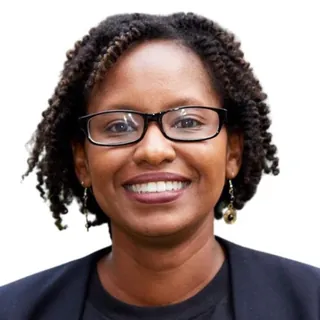
Fareedah Shaheed From Tech Curious to Information Security
Security Control Analyst at a financial firm and founder of Sekuva
Episode summary
Fareedah, a lifelong learner, was always interested in technology and grew up reading her father's Cisco books. His influence led her to the field of information security, where she stepped up and is always tackling new challenges.
BIO
Fareedah Shaheed was born in Maryland, but spent most of her childhood outside of the US. She returned to the States in 2013 and attended the Community College of Baltimore County (CCBC), where she majored in cybersecurity.
Her experiences with different cultures and the tech field led her to combine her interest in psychology with cybersecurity, and thus, her passion for security awareness was born.
In 2018, she founded Sekuva with the mission to educate and support small business owners and families with understanding how to secure their sensitive information.
She currently works as a Security Control Analyst at a financial firm in Maryland.
Notes:
Currently works with Security Awareness and Threat Intelligence
Must break down concepts for both executives and associates
Saw that there was a lack of cybersecurity awareness for "regular" people, especially with parents
Got thrown into leading "lunch & learn" events and experienced imposter syndrome due to her lack of her experience
Her lack of experience became a benefit to the audience as they were able to relate!
Father was in tech. Changed her major in college based on his advice
Wanted to teach, but didn't want to be a teacher
Has read 2000 books since childhood
Fareedah had really good role models growing up
Quotes:
"I vowed never to have anything to do with math whatsoever."
"I was a broker, I did an internship, I did teaching... and through all of that, I realized I didn't really want anything but tech."
"Whatever your parents' field is, that kind of is in the back of your head, whether it's a yes or no."
"Let me do it. Let me try this out."
"Cybersecurity is new. It's upcoming. I really believe that your skills would be good for cyber. There's not a lot of women there. Especially not a lot Muslim women there, who look like you."
"I remember just lying awake at night just thinking about how does WiFi work."
" Instead of guards, we have guides." [21:12]
"You have to do it afraid; you can't wait for the perfect moment." [25:35]
Before infosec: IT student who tried brokering, mentoring and teaching
Chapters
- 0:00
Cold open and guest intro
Ayman previews Fareedah's relationship with math, guides over guards, and doing things afraid, and marks episode 25.
- 1:31
Security awareness and threat intelligence
Fareedah explains her two roles and how she breaks security down for executives and associates.
- 3:58
Why she founded Sekuva
She started a coaching course because one-on-one security help for everyday people and families was missing.
- 7:11
Leading lunch and learns and imposter syndrome
Thrown into leading sessions with limited experience, she found being closer to the audience was a benefit.
- 9:56
Avoiding math and her father's advice
How she ended up in tech after trying brokering, mentoring and teaching.
- 13:15
A first computer with no internet
She recalls lying awake wondering how Wi-Fi works.
- 14:44
Teen years, 2000 books and role models
Books about women in technology and her parents' encouragement shaped her confidence.
- 17:18
Cybersecurity major and leaving college early
She switched majors at community college then left to find a job.
- 18:52
The Year Up program and her first job
Six months of training and a six-month internship at a financial firm led to a hire.
- 23:08
What's next and advice for newcomers
Fareedah gives "corny" advice on intentional networking and doing things afraid.
- 26:35
Internal war stories: perfectionism and imposter syndrome
She talks about battling perfectionism and the value of sharing failures.
- 30:47
Curating what you consume online
She mutes and blocks negativity because what you consume changes your mindset; Ayman closes with a plug for his community.
Key takeaways
- Network intentionally; she credits almost everything she has done to meeting someone accidentally or on purpose.
- Do it afraid, because waiting for the perfect moment means it never happens.
- Being closer to your audience's experience can make you a more effective teacher than a more senior expert.
- Look into programs like Year Up, which pair training with an internship and can lead directly to a job.
- Employers can look beyond resumes; hiring for talent and offering guidance rather than gatekeeping improves security.
- Protect your mindset by curating who you follow and what you consume, and share your failures to normalize them.
Notable quotes
Instead of guards, we have guides.
you have to do it afraid. You can't wait for the perfect moment.
whatever your parents field is, that kind of is in the back of your head, whether it's a yes or no.
Questions answered in this episode
- How did Fareedah Shaheed get into information security?
- Her father, a network engineer, encouraged her to try cybersecurity after she had avoided math-heavy fields. She switched her community college major, then completed the Year Up program and an internship that led to her first security job at a financial firm.
- What is Year Up and can it help me start a cybersecurity career?
- Year Up helps young adults get into IT, cyber, business and finance. Fareedah did six months of training and a six-month internship in a cohort of about 80; it offered a stipend and tuition support and most graduates found jobs.
- How does Fareedah deal with imposter syndrome?
- She reminds herself that her purpose is to provide value, not to be perfect, and that audiences respond to presence more than flawless delivery. She also limits negative media and shares other professionals' failures to normalize mistakes.
Show notes and links
Show the original episode notes
Fareedah, a lifelong learner, was always interested in technology and grew up reading her father's Cisco books. His influence led her to the field of information security, where she stepped up and is always tackling new challenges.
BIO
Fareedah Shaheed was born in Maryland, but spent most of her childhood outside of the US. She returned to the States in 2013 and attended the Community College of Baltimore County (CCBC), where she majored in cybersecurity.
Her experiences with different cultures and the tech field led her to combine her interest in psychology with cybersecurity, and thus, her passion for security awareness was born.
In 2018, she founded Sekuva with the mission to educate and support small business owners and families with understanding how to secure their sensitive information.
She currently works as a Security Control Analyst at a financial firm in Maryland.
Notes:
- Currently works with Security Awareness and Threat Intelligence
- Must break down concepts for both executives and associates
- Saw that there was a lack of cybersecurity awareness for "regular" people, especially with parents
- Got thrown into leading "lunch & learn" events and experienced imposter syndrome due to her lack of her experience
- Her lack of experience became a benefit to the audience as they were able to relate!
- Father was in tech. Changed her major in college based on his advice
- Wanted to teach, but didn't want to be a teacher
- Has read 2000 books since childhood
- Fareedah had really good role models growing up
Quotes:
- "I vowed never to have anything to do with math whatsoever."
- "I was a broker, I did an internship, I did teaching... and through all of that, I realized I didn't really want anything but tech."
- "Whatever your parents' field is, that kind of is in the back of your head, whether it's a yes or no."
- "Let me do it. Let me try this out."
- "Cybersecurity is new. It's upcoming. I really believe that your skills would be good for cyber. There's not a lot of women there. Especially not a lot Muslim women there, who look like you."
- "I remember just lying awake at night just thinking about how does WiFi work."
- " Instead of guards, we have guides." [21:12]
- "You have to do it afraid; you can't wait for the perfect moment." [25:35]
Links:
- Fareedah on Twitter: https://twitter.com/cyberfareedah
- Fareedah's Company- Sekuva: https://sekuva.mykajabi.com/
- Year Up: https://www.yearup.org/
Getting Into Infosec:
- Follow Me on Twitter: https://twitter.com/coffeewithayman
- Subscribe To YouTube: https://www.youtube.com/channel/UCg6gV_gdfc188HZdN8LUx4A
- Checkout My Book: https://amzn.to/2HP2i25
- Sign up for updates and commentary: https://mailchi.mp/467573a314e5/gettingintoinfosec
- Website: https://gettingintoinfosec.com
See omnystudio.com/listener for privacy information.
Mentioned in this episode:
Full transcript
Transcribed from the episode audio. Spoof ads (Ayman's parody commercials poking fun at the industry) are marked.Download .txt
I remember just like lying awake at night, just thinking about how does Wi-Fi work? You know, people count sheaves to fall asleep. I would like try to figure out how Wi-Fi works.
Welcome to Getting Into Infosec. I'm your host, Ayman Elsawah. My next guest is Farida Shahid. Farida is a security controls analyst and the founder of Secuva, where she created an online course to help small businesses and families secure their data. We talk about her relationship with math.
I used to love math, but I gradually kind of started hating it through all the schooling that was around.
As well as reflections on how we should approach security as a community.
I think that's how we improve security instead of looking at it through a gate mentality. Instead of guards, we have guides.
And tackling the perfectionist in each of us.
I realized that you have to do it afraid. You can't wait for the perfect moment. And I'm definitely a perfectionist. I'm definitely wait for the perfect moment sometimes. And I had to realize this, take a step back and be mindful that it's never going to be perfect. And you have to make it perfect yourself by going through it.
Wow. Well said. She's also read 2000 books in her lifetime. So we've hit a major milestone. This is episode 25. Super excited to have come this far. All right. On to the show. Hi, Frida. Welcome to the show.
Thank you, Eamon. I appreciate you inviting me here.
Yeah. Thanks for taking the time out of your busy schedule. So maybe you could introduce yourself to the audience. Maybe a little about yourself. We could start from there.
Okay, perfect. So my name is Farida Shahid. And well, of course, I work in security, but I work within two teams. So the security awareness team, and I do a little bit of threat intelligence.
Oh, okay. And so maybe if you could break it down for the audience, what that really entails.
Okay, so for the security awareness, what I do is anything that involves bringing security to people in the company. So if they don't know anything about security, we talk to them, developing the security training or editing it, doing lunch and learns, writing articles, anything that's raising awareness for security, but also setting aside time to talk to people about security and what they can do about it. How they can help secure the company and themselves after work, even sometimes talking about their kids or their loved ones and how to secure themselves outside of work instead of just inside of work. And then the threat intelligence side is I just support the team with making sure the messaging is going out with the right people.
So the incident responders and making sure everyone has the most up-to-date information so that we're rolling out patches in time.
That's interesting. So you probably have a good feedback loop between the two sides where threat intel information can kind of feed some of your security awareness trainings. Is that right?
Yes, definitely. So what I have to do is I have to break down the security concepts in a way that other people, whether they're associates or executives, so they can understand what to do. So if they're a business executive, they understand what's going on and what may be required of them just for general situation awareness. And then for people who are associates, so they know what is going on in terms of what not to click on or what to watch out for, especially right now we're in tax season. So we put out information about that as well in awareness.
Yeah. Okay. And so what's the most interesting question you've received from the security awareness side?
Most interesting question. I don't know. I think most of it seems to be like the regular questions.
Which are?
I know sometimes they would ask like, what type of software do you use for security? I'm talking about VPN. They ask, hey, can I use it at home? Just like regular questions. I know some people have asked me to sit down with them and walk them through some steps. And that's something that I'd probably talk about later on about my experience with that and my frustrations with that and why I decided to do something about that.
Okay, great. Well, tell us a little about that. You had a story there?
Yes. So what I found was when I was sitting down with people and talk to them about the steps, my job is really to give awareness and to gather intelligence. So I don't have enough time to sit down with people and walk them through those really important steps, especially since there's a lot of people, thousands of people, if I'm wanting to get information out. So Most of the time, you just have to post something and you have to break it down, knowing that a lot of people aren't going to read it. And when I do Lunch and Learns, you know, I have a couple hundred people on a virtual platform or you might have like maybe 30, 40 people in the room. Sitting down with a one-on-one is kind of difficult.
But when you're able to do that, you don't have enough time allotted for that. And I believe that I couldn't provide as much value as I wanted to. And I thought, OK, if people don't understand cybersecurity and they don't know how to implement it, then I need to take time and sit down with them and walk them through it. And so that's why I created Sakuva, because I felt that something is really needed. And I looked around and I didn't see cybersecurity coaching for regular people, everyday people. And since it's really important and no one has any idea what cybersecurity is, I thought, let me bring my experiences from infosec to the regular people.
I see. And how has it worked out?
There's a lot of great interest in it. And I've talked to several people who didn't understand the magnitude of it until something happened to them, until they've gotten hacked or until their entire business shut down for months, until they had to dish out thousands of dollars to fix something. And when they're talking to me, they usually are the most passionate people because they understand how important security is.
Yeah.
But it was kind of too late for them in that sense. It's never too late, but they felt like it was too late. And they really appreciated what I was doing. And definitely some other people who understand security and they're really interested in helping themselves and their family. There's a great interest with mothers or with parents with their kids online because kids nowadays are on YouTube and Instagram and Pinterest. And so there's a huge gap in terms of what they know and what is out there.
Yeah, online safety is a really important issue. I volunteer in my kids' school and it's just so important. There's so many angles, but really it comes down to educating the parents because at the end of the day, there's only so much you could do at school. It's what they do with their devices at home, right?
Exactly.
Yeah.
So that's why I felt like we need to reach people there. And that's why I created the course. It's an online course that people can go through and it's a coaching course. So that's why I did it because I felt like in these situations, in these settings, you do something, you go home and it's just like, you forget it. And I wanted to do something that reaches people where they are and provide that intimate setting where we can just ask questions and walk people through that. I feel like that was really missing in the security field.
I say, is it automated or is there some involvement there?
There's a lot of involvement. Some of it's automated in terms of the course coming out. It's a drip course, so it comes out week by week. There's each module for one week. So all of that's automated. The emails are automated. But in terms of the coaching calls and having one-on-one calls and having group coaching calls, that's not automated. That's me actually getting on and talking to people.
That's great. That is really good. So when you're giving some of these security awareness trainings on Lunch and Learns, when you first started, did you have difficulty starting with that?
I would say I had difficulty, but it was also a little easy. And I guess I'll break that down because, of course, I felt like, okay, what am I doing leading Lunch and Learn? Originally, I wasn't going to lead their Lunch and Learn. But what happened was I had three people on the team that was doing the Lunch and Learn. One, unfortunately, got sick and he was out. And when he came back, he didn't have the energy and the strength to do the Lunch and Learns. And the other really wasn't interested in social interaction like that, you know, just a behind the scenes person. And so my manager looked at me and the rest of the team looked at me and they're like, that's it. You're leading the Lunch and Learns for the rest of the month.
And I'm like, what? Okay. So I was definitely nervous because I didn't think that I would be doing that type of platform, that large of a platform and such a large organization. And they just trust me with it. Of course, we had different events before, so they kind of knew how I was and they knew that I loved public speaking and that I really love teaching. I had a lot of experience teaching, tutoring, mentoring, coaching. So they kind of knew that background and they thought, well, go for it. And it was difficult, of course, because I had to go through imposter syndrome. That's what it is, where you feel, OK, someone who has 20 plus years experience should be talking about this. Not me. I only have maybe like three years of experience in total in cyber.
So why am I talking about this? But I realized that if you have just a little bit more experience than someone else, you can be of value. And it's interesting because the position I was in actually made me more valuable than someone who had more experience than me. And the reason being is because I was more closer to the people who I was talking to. So they resonated with what I was saying more and I could understand their struggles. And I wasn't this person who had a PhD in cyber, not knocking anyone who has a PhD in cyber.
Right.
But everyone has a different skill set. So if you have a PhD in cyber, you have a skill set somewhere. And if you don't and you're closer to the people in that sense, you have a skill set somewhere else. So I had to realize that my experience or lack of experience in some areas was actually a benefit to the audience. And they absolutely love that. That was because I was able to provide that close of experience, understanding their pain and kind of going through with them and laughing with it, but also providing them like, hey, here's their point of view and giving them that patience because I understand what they're going through.
Yeah, I agree. I think you're able to relate to the audience because you might have just gotten in the field, quote unquote. But yeah, being able to relate to audience in any way, I think is really important in anything security.
Yes, definitely.
Great. And so tell us, how did you get into security to begin with?
So I definitely didn't think I would be in this field at all, like whatsoever. I used to love math, but I gradually kind of started hating it through all the schooling that was around. And most of all the professors are the teachers that I had. And so I vowed never to have anything to do with math whatsoever. Yeah.
It's like any field that has like any bad, like what plus what, I'm not doing it. It's over.
I'm sure a lot of people could relate.
Yeah. I was like, nope, not happening. And so that's why, you know, those little jobs people do where you're a cashier or something. Or I was like, no, I didn't want to do that because that involved money and adding things. And I didn't want to do that. Yeah. So that was how much I was kind of avoiding it.
That's funny.
Yeah. I did a few little jobs where I was a broker. I did mentorship. I did teaching. And through all of that, I realized that I didn't really want anything but tech.
How is that?
The reason being is because my father was in technology. He was a network engineer. And so whatever your parents field is, that kind of is in the back of your head, whether it's a yes or no.
Right.
And that always kind of been a no for me because math, you know, I was like, no. But that was the last checkbox on my list and I was looking at that list and I thought, okay, you know what? Just let me do it. Let me try this out. So I made a huge leap and I made that my major in college and I did IT, but I had this conversation with my father in the car one day and he was talking about how IT is great. He's been in IT for like decades, but he said, you know, cybersecurity is new, it's upcoming. I really believe that your skills will be good for cyber. There's not a lot of women there. Hmm. Especially not a lot of Muslim women who look like you. And I really would love you to get into cyber. You should look it up.
So I spent a few months looking it up, researching, and I finally made my decision that I was going to change my major to cybersecurity.
Oh, wow. Okay.
Yeah. I have no idea. It's just another big leap. And I just thought, okay, as long as I'm not doing math, like that was just the biggest.
Yeah.
I was so scared of that.
There you go.
Yeah.
And what was your major going into college?
It was network technology or information technology.
Network technology. Yeah. Okay. So right from the get-go, you were in some sort of IT field.
Yes. I don't know why.
Well, yeah. Why was that? What were your choices at that point when you were looking to apply?
Well, I think it was because I knew that I didn't want to be a teacher. I knew I wanted to teach. And that's why Sukupu was so easy for me. But I didn't want to be a teacher, if that makes sense, where I didn't want to teach in a school because I felt like I'd be constrained. And I just didn't want that type of environment. I knew I didn't know if I could handle the kids. It was just too much. So I was like, okay, I don't want to do that. I can tutor or something, but I don't really want to teach. Okay. And so the checkbox went down to one. And then, of course, I was surrounded by IT growing up. Like I used to read Cisco books.
Oh, really?
I really love that. Yeah, because we had that laying around. We used to take apart computers. I just love to know how things work. So that was always in the back of my mind. But I think somewhere when you go through school and you get anything less than A+, you think that you're stupid in it. And I think that's what happened. And at that point, I was kind of tired of it. So I decided, let me just make that leap.
That's awesome. And were you surrounded by computers at an early age?
Yes. My parents made sure that I had a computer, but they very intentionally didn't have internet on it. They wanted me to figure out how it worked and what to do. And so, yeah.
So describe that. What was your first computer interaction? Walk us through that a little bit.
I don't I can't remember what computer was. I know people can remember them, but I can't remember. It had a ThinkPad. Yeah. OK. Yeah. So it didn't have Internet. So I was just looking at it like, OK. But I was really curious. And so one thing I just wanted to see how it worked. And it was a really interesting experience. And that's the first time that I realized that, OK, because I remember I didn't know how the Wi-Fi worked. And I just was like, how does it work? Because I know how Ethernet works. So that makes sense. But I remember just like lying awake at night just thinking about how does Wi-Fi work?
Wow.
So I would just spend like, you know, people count sheaves to fall asleep. I would like try to figure out how Wi-Fi works.
Nice.
Yeah.
What age was that?
Oh, gosh, that was probably maybe 10 at the least. Oh, wow.
Yeah, that's pretty cool. And is your mom also in tech?
No, she's not. She's a genius in math, but she has her master's in English.
Okay.
So that's why I wanted to do something like, you know, grammar or something like that.
I see.
So my hatred for math kind of hurt her because she really loved it. I think she was hurting more that I didn't have that confidence in myself. But now she's happy because she sees me kind of flying away with everything.
Okay. And then as you're going through your older childhood, teenage years, were you really into computers or computer clubs? You know, describe that.
No, not at all. Actually, I was the typical kid where I hated math because I used to love math actually before then. I can't remember how I did it, but I used to do like multiplication tables on my fingers, like whatever, you can just give it to me and I got it. And I had this teacher who hated that. She wanted me to memorize and I've always been bad at memorizing things that I don't understand. And that kind of went downhill. And then from there, I think that was maybe four Fourth or fifth grade. And then I just started hating math because I felt like it was bad.
Right. And then were you still actively using computers at that time?
No, I fell off because I was just like, nah, I mostly read a lot of books. I had about 2000 books. So I read a lot.
Wow. 2000 books.
Yeah. 2000 books. I counted by the way.
That's amazing. What kind of books were they?
Oh gosh, anything and everything I could get my hands off on loved books that were completely out of my reading range.
Oh, okay.
I can't remember each and every one of them, but I love psychology and human behavior. That was something that was deeply, deeply interested in. That's something that I just loved it so, so much. So that's what I kind of loved it.
Wow. So you read fiction and nonfiction books?
Yes.
Wow. Okay. Yeah, I'm just trying to paint a picture for those who have kids out there. What should they do to help their kids maybe get into either computers or even more cybersecurity, you know? So...
I think one thing that really helped was having books about people, women and Black women who were in technology or who were the first in any field. So whether it's writing, whether it's neuroscience, whether it's astrology, whatever it is, whatever subject, having those role models really kind of subconsciously told me that I could do it. Because I was in an environment where a woman couldn't do it, a black woman can't do it. So having that in my head, even though consciously I wasn't feeling it and I felt insecure, having those books, having those stories subconsciously really, really impacted me. I heard the other day someone said that they had a parent who always spoke beautiful words to them in terms of telling them that they're smart, that they're intelligent.
And my mom and my dad did such a good job doing that. And I didn't realize the impact of that until later because I didn't feel it until I felt it.
Wow. That is really important to know. Thank you. I think we as parents underestimate the language, speaking as myself, as parents, I think underestimate the language, the messaging that we send to our kids.
Yes, definitely.
Yeah. So thanks for that. You're welcome. So then going to college, so you were in college and did they offer a cybersecurity major? You said you switched majors.
Yes, thankfully they did. And I got into that.
Oh, okay. So I made it easy.
Yes, I did. Because I was in a community college. So it made it easy. But the reason why I hesitated was because the four-year college, not all of them had it. And the one that I wanted to go to didn't have it. And that's what kind of made it hard.
Okay. So walk us through that.
Well, I didn't get to that point.
That's awesome. I did not get to that point. I have this track record and I don't know if it's good to say, but I have this track record where if I don't think something's right for me, I'm gone. And I realized that college, while it's good and it developed my skills and I loved it, it just didn't give me that relief that I was looking for where there's just like this itch and I needed to relieve it. And college wasn't it.
Hmm.
I love learning and I love experiencing. And college wasn't me learning. It was just me soaking up information. And one thing I don't like doing for a very long time is soaking up information. That's been a constant theme in my life where once I soak up enough information, I'm like, okay, now what do I do? So I was in college for about two years and I was like, okay, what do I do? I can't just sit on this information. And of course, certifications, that's great, but it costs a lot of money, especially as a college student. And so I thought, let me just get into the job market. Let me get a job.
Wow. That's great. Okay. So then after college, how was it interviewing for cybersecurity jobs?
So I had a different route into cyber and I didn't get to have all those horror stories about interviewing, especially as a minority like me. But what I did was I was searching for an internship. It was kind of hard to do that, honestly. But after like maybe three months at least of searching for an internship, I found this program that helped young adults get into IT and security. And I'm a huge advocate for programs like that. And I went through this program called Year Up.
Okay.
And it basically helps young adults get into IT, cyber, business, finance, whatever it is across the U.S. And so that's what I went into. And I'm extremely grateful for programs like that because they give people who otherwise wouldn't have a chance to get into a corporate world or get into a job. So I went into that. I got an internship at this financial firm. And then six months after, I got hired. And then that's how I got my first job.
Wow, that's awesome. Yeah, Year Up is an amazing organization. And so you were an intern in the cybersecurity? Yes. When you went to Year Up, you were in the cybersecurity program, correct?
Yes.
Yeah. What would you suggest for hiring managers or how would folks interact with Year Up? What would you recommend to those out there looking to work with organizations like Year Up?
I think they would have to contact Europe, definitely on their website. They have information about contacting them. There's a lot of big companies that have them as corporate sponsors and sponsoring them, sponsoring a student. It's not, I think, but I know that's extremely helpful because you have no idea who you're missing because you're looking at a resume and that doesn't have everything that you want on there. I always felt that the company that hired me took a huge risk. But when I talked to them, they said like, no, it wasn't a huge risk. It's actually like pretty good. It was fine. And in realizing that there is some type of talent, whatever it is, outside of what you're looking at. I think that's how we improve security instead of looking at it through a gate mentality.
Instead of guards, we have guides.
Yeah. Yeah. And for those looking to get into a Europe program, how would they go about that?
If they go to the site, it should show you which states they're in. And then you can see which one is the nearest to you.
Okay. Like how long was the training, I guess, that you went through?
Six months. Six months and then a six-month internship. I really wanted the internship. That was the most important part for me because I already did college and all of that learning. But I decided to go through it again because it was worth it and you make sacrifices. So that's what I did.
Wow. Okay. And how big was your cohort?
80 people.
80 people. Okay. And did everyone find a job after that?
Most people. It really depends on how you do. So most of them did. Yes.
So is everyone like graded? Maybe give us a little about the Europe experience for you. How was it? I guess for those out there looking to understand more about Europe, because six months is a long time to go unpaid. It is. And I know that's a difficult thing for many people, but maybe walk us through that briefly about the process for you.
It definitely depends on your situation. They do work extremely hard to accept and support anybody who comes to their doors. They really, really do. And so they have a lot of support in terms of financial and getting their travel food. For me, I was lucky I had a place to stay that I didn't have to pay rent. Right now, of course, you know, because I have a job, but... You know, before I didn't have to. So that was a really good thing for me, but they do give you tuition reimbursement. They give you a stipend. It's really small, but it really depends on where you are, but it does cover food and travel. And then they work with you to cover anything else that isn't really covered within the stipend.
Okay. And if you're a working professional, do they have night programs too or only daytime?
They only have daytime, so they work with you to get either a new job or they help you through that process. Many people do work and do year up. Usually once they get to the internship, they might not, or they might just do three months into it. It depends on everyone's situation. Everyone kind of handles it differently.
Okay. And so back to what you do today with the threat intelligence and security awareness, what do you see next for you in the field?
I definitely have that itch again. Oh yeah.
Okay.
Yeah. And so that's why I started Sakuva. So I definitely see myself continuing on with Sakuva and doing that because I feel like that's the value that I can bring. I love bringing value. I love helping people. And for me, that's the best way that I can do it. So I definitely see myself doing that.
Cool. And so what is some advice you have for others looking to get into the field?
Usually the advice that people give is really corny.
I mean, there's a variety of advice. It can't all be corny.
Oh, no, it's all corny. Okay. No.
So I guess the advice you're going to give is going to be corny too, huh?
Exactly. Okay.
Fair enough.
That was literally what I was leading it to. The advice I'm going to give is corny.
Okay.
And I think, you know how someone says, I think there's like movie scenes where someone would say, you know, that was the oldest trick in the book. Like after someone tricked them successfully and they say, oh, that was the oldest trick in the book.
Mm-hmm.
And I always thought that was interesting because I was like, well, that's the reason why it's sealed strict, because it works. And that's the same that I see with advice, the corny ones. The reason why it's said so often, most of the time, I'm pretty sure there's one or two that's like, eh, that's probably not right. But most of it's corny and said so much because it's true. And I think the biggest few for me was networking, but intentionally networking. I always say that about 100% or 99% of every single thing that I'm working on would not be possible without accidentally or intentionally meeting someone. And when I say accidentally, I mean being in the right place at the right time for the right reason, and then accidentally bumping into that person that is going to change your entire life in that second.
And that has been a theme that has been rampant throughout every single little tiny or big success that I've ever had ever. And in doing things afraid, there's a lot of things that I've done that I had to take a step back and be like, what are you doing? Why are you doing this? But I realized that you have to do it afraid. You can't wait for the perfect moment. And I'm definitely a perfectionist. I'm definitely wait for the perfect moment sometimes. And I had to realize this, take a step back and be mindful that it's never going to be perfect. And you have to make it perfect yourself by going through it. And it's been a crazy journey. And I know this is just the beginning. And I would love for people to really like take that to heart and understand that networking and connecting and understanding people and getting out of your comfort zone is the biggest blessings you could ever give to yourself in terms of growing and being better professionally or personally.
And of course, connecting with other people who are going through the same thing.
Yeah. Wow. Well said. I think the afraid part that you mentioned, I think that's a good point. You know, we try to wait until we have that confidence, but maybe just jumping into it, right?
Right.
Not waiting for all that.
I mean, of course you need to know.
Yeah. I read a quote one time in a book. It said, perfection is the twin of procrastination.
Yeah.
And so I also am a perfectionist and sometimes I spend so much trying to edit an episode and get it right. And I'm like, oh my God. But in any case, those are some really good words. Thank you, Rita, for sharing that.
No, thank you. I appreciate it.
Great. Do you have any interesting war stories, cybersecurity war stories that you'd like to share with the audience?
I don't think I've ever had war stories. I don't think I have had that yet. The only war story is the battle I have within me inside.
Okay.
I think that's something that happens internally all the time. But I don't have any external war stories where I like messed up something. And I thought, you know, I didn't realize it was in prod or something. I don't have any like stories like that where I messed up the system or anything. Yeah, no war stories.
You were going to say something about battling yourself.
Oh, yes. So I have internal war stories instead of more external. I think being type A, not I think, but I know being type A and being a perfectionist, you're always battling within yourself to do something. And I've had moments where I wasn't going to send an email because it wasn't perfect or I wait to send the email for three days or I forget to follow up and networking for three weeks because I'm like looking at that like, oh, no, that doesn't sound right. I know, especially starting my own company at the age that I am and getting into certain situations, I had to battle within myself to pull that out, to pull who I am out. I've always been a very confident person, but I've realized that battle within you is like everyone has that.
And I think one of the most important things that I've been seeing lately is people sharing their quote unquote failures and making it normal because it is normal. I think that was one of the best things ever. Anytime I felt like I made a mistake that allowed me to just kind of go within myself is like, it's okay. You're human. You can make mistakes. And then one thing I really remind myself is that it's not the mistake that you make. It's what you do about it afterwards that matters. And what I try to do is make sure that everything afterwards is as perfect as possible in terms of perfect as an imperfect and go through that within myself. Because that's something where if you're doing a new lunch and learn, if you're starting a business, if you're talking to a new client, if you're teaching something, especially trying to make sure everything's correct and the facts are good and you're teaching well.
I think that kind of goes within your mind. But when you get that outside feedback saying, you know, it's actually good, that's good. But I realized that kind of doesn't help the battle within because it's coming externally. I think the internal validation is more important than external. External is very good, but if you can be okay with yourself internally and say that was good without someone else having to say it, I mean, they should say that's good. So, you know, because you have to give service to them. You have to understand if they like it, but Definitely having that conversation with them and looking at it objectively and saying, you're good, you're fine. Be on your way.
Wow. What are some practical tips you do to battle imposter syndrome?
I think the best thing is for me, I remember like my purpose and why I'm here and I'm not here to be perfect. I'm here to provide as much value to myself and other people and that no one in this world is ever going to be perfect. And also to realize that no one cares about you. And I know that sounds crazy. Yeah. But at the end of the day, you care more than anyone else does, especially when you're having a speech or you're doing something. No one knows what you're supposed to say, but they know how confident you feel in that moment. They hear and feel your feelings. And that kind of calms me to realize that the world doesn't revolve around you. No one really cares about you in that way. But what they do care about is your presence.
That's what people can feel. That's an undeniable thing. And if you can just be present and connect with people's hearts and souls, that's more important than if you say, ah, or if you fidget. Of course, you don't want to do that. But connecting people in that way is more important and realizing. Reading through other people's Twitter feeds or Facebook where they're talking about their quote unquote failures. It really inspires me to keep going, especially people who are well-known or people who are pros saying, hey, I messed up. And I think I've shared a couple on my page because I want to amplify that message, not to say, hey, this person messed up, but hey, we all do it and it's okay. And they're so brave to actually share it.
Yeah, well said. It's just hard, I think, with social media. We still don't see that much. You know, for me, I wasn't on social media much, but I guess what I'm trying to say is we need to be on social media to stay current, but then kind of like sometimes it has an adverse effect.
Yeah, definitely.
Yeah, so...
I'm very picky about who I follow. And because I have so much going on, I have to make sure what I'm consuming is good. And I know people think it's bad, but I don't have the news all in my feed and I don't have the news running in the background and the TV. Because if you're consuming something that's constantly negative, not that negative won't happen or doesn't happen. It's It's just that you don't, when you consume it too much, your mindset changes. So I used to have a fail blog. I don't know if, I can't remember if it's still up, but it would just collect people's fails. And I always thought it was hilarious. It was like memes, people failing, like a weird sign that was spelled incorrectly, someone's shoe was wrong, you know, all that.
And that was really funny. It's all fun and games. Then I realized, hey, I want to produce the same content. So I realized that I started going around the world looking for negative to screenshot it to put up into the site.
Nice.
And that was a huge realization to me in that moment that what you're consuming changes your mindset and how you view the world. So when I'm on Twitter, when I'm even gaming, because I game a lot, I mute people, I block people, I don't follow other people. If I don't like it, I don't say anything. I just unfollow. Or I just don't pay attention to it because I know how much I mean to me and how much my energy means to me and everyone else I'm working with. And I cannot consume that. And when I see it, I either have to vent to someone else because, you know, you're going to see negative. But I try as much as possible to kind of control it because I'm worth it.
Wow. Yeah. Protect yourself.
Yeah.
Input output comes out to input, right? Yep.
Exactly. Garbage in, garbage out.
Yeah. Yeah. Wow. Awesome. Well, Farida, thank you so much for coming on the show. It's been a pleasure and hope to do a part two in the future.
Yes, definitely. Thank you, Eamon. I appreciate you bringing me on.
All right. Thank you. Bye. Hey, thanks for listening. So I built a lot of things and I'm building something new. I'm working on a new community. I want to bring everyone together with all the things that I've done into just one space. So I'm really excited about it and would love to stay in touch and get some early adopters or feedback. So check out the link below in the show notes and send me a hello. And that's about it. I hope you're having a wonderful day. Thanks. Talk to you soon. Thank you.